La Ventana on the Fly (and not!)
Intro
La Ventana is a small fishing town outside of La Paz on the Baja California Sur peninsula. It’s mostly known for the wind activities (my primary reason to go), fishing, and Orca diving. Almost every day, there is a thermally-driven wind that benefits from the Venturi effect channeling wind through the mainland and Isla Cerralvo about 8 miles off. This wind activity drives wind swell down the channel between the island and the mainland, which means that the easiest and best time to go fishing is in the early morning, so that this swell has died down and the wind hasn’t picked up yet. I tried going out on the water almost every morning of the week I was there to cover as much ground as I could. The shore there is primarily a sand beach, with a moderate drop off at high tide, and some exposed rocky sections at low tide. There are some reefs offshore about 100-200 feet, so those are only reachable by watercraft. While I was there, high tide was around 6-7 in the morning, which was perfect to coincide with the sunrise. Luckily, this meant that there wasn’t too much of the rock exposed to snag on.
Strategy
First approaching the shoreline was daunting - I haven’t fished from shore in an area that has minimal water movement like the Sea of Cortez, so I didn’t really know where to cast. However, in the morning, I saw many small schools of Sardina getting chased around by some unknown predator, with some of them breaching the surface and skipping along. So, when in doubt, follow the baitfish! I casted out towards the schools of baitfish and tried stripping a #2 blue and white clouser through the schools. These baitfish were on average much larger than the flies (x-referenced by snorkeling), so I started at a little of a disadvantage. Overall, this strategy seemed to pay off pretty well in general, since the larger fish typically follow the baitfish schools. Since I spent most of my time fishing from shore, I was more limited in the amount of area that I could cover, so I made a point of walking along the beach and switching up location frequently.
We chartered one fishing charter for a morning, which proved very successful (Captain Cano). I mainly spin-fished from this charter, but I did have the opportunity to use the fly rod, and had some success with it. On the charter, we were able to cover a lot more water, and caught a significant number of fish. We bought some live bait from some bait-netters near shore for $30, and then used that bait to chum the water before stripping the fly (and the spin lures + live bait on hooks) through the feed. We moved from spot to spot quickly, probably not spending more than 15 minutes in any given spot, and if there weren’t many fish around, less than 5.
Rigging
The equipment that I brought was:
- 8 wt rod (see other post for how it was built)
- Redington Behemoth 7/8
- Scientific Anglers Sonar Camo Intermediate WF8L
- Assorted Clousers
- 15lb mono for tippet
Results
Overall, I would say that this trip was a great success, especially considering my expectations and previous experience. The fish caught are listed below:
Pufferfish
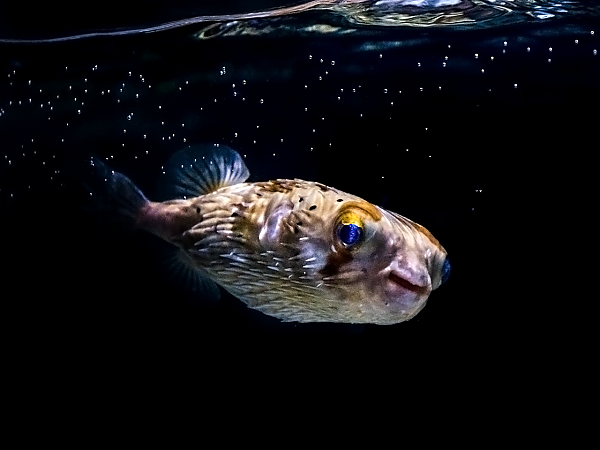
Spiny Porcupinefish
Longnose puffer fish
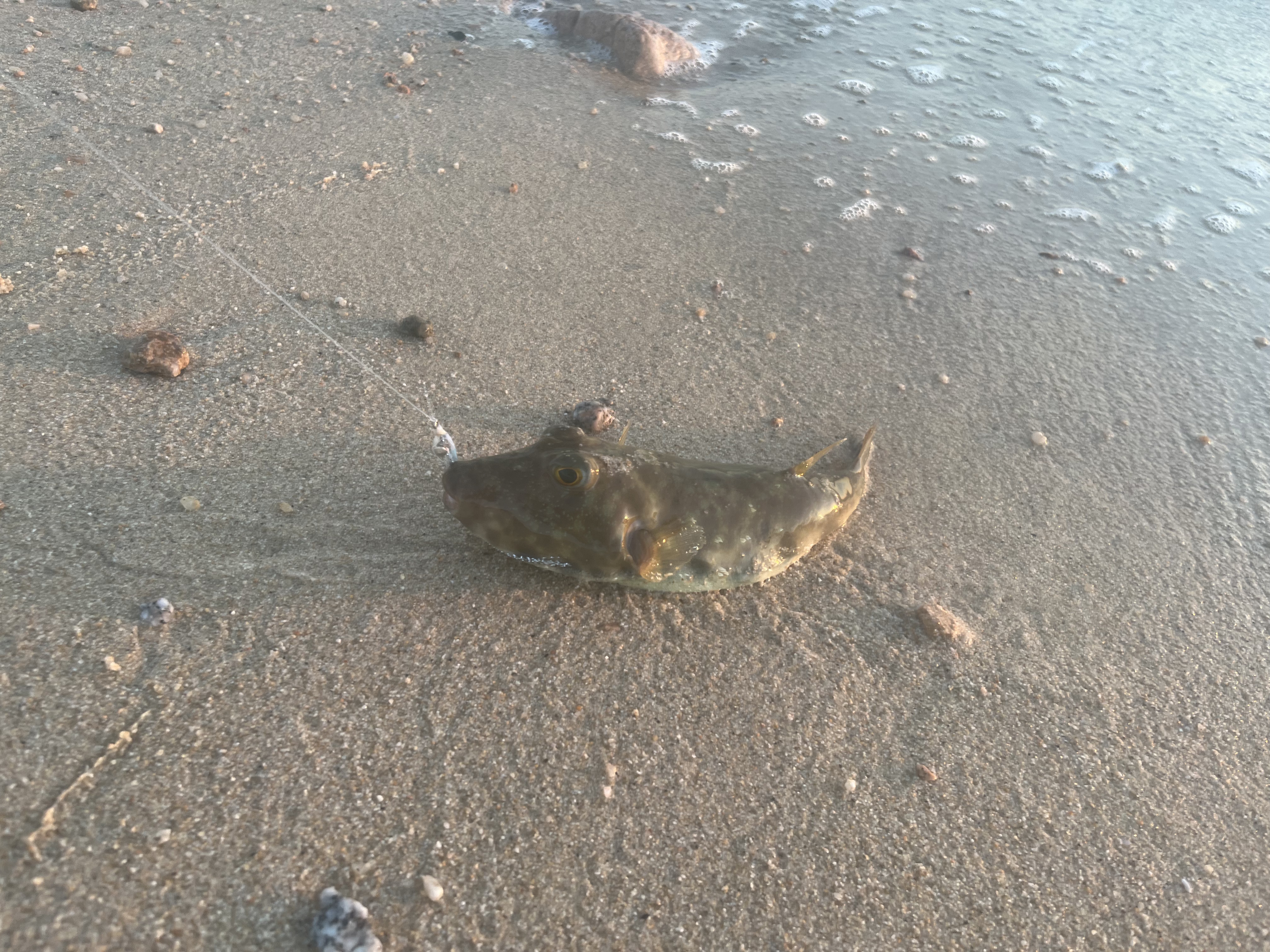
There were a lot of pufferfish. What a weird looking fish! There were some spotted ones, some spiny ones, and some without either. The spiny ones were Balloonfish (Spiny Porcupinefish), and a Longnose Pufferfish, and one more unknown species. These typically trended on the smaller side, and would follow the fly almost all the way into shore before going for it. I stopped trying to catch any of them because they were annoying, so I just stripped faster when the fly was closer to shore.
Trumpetfish
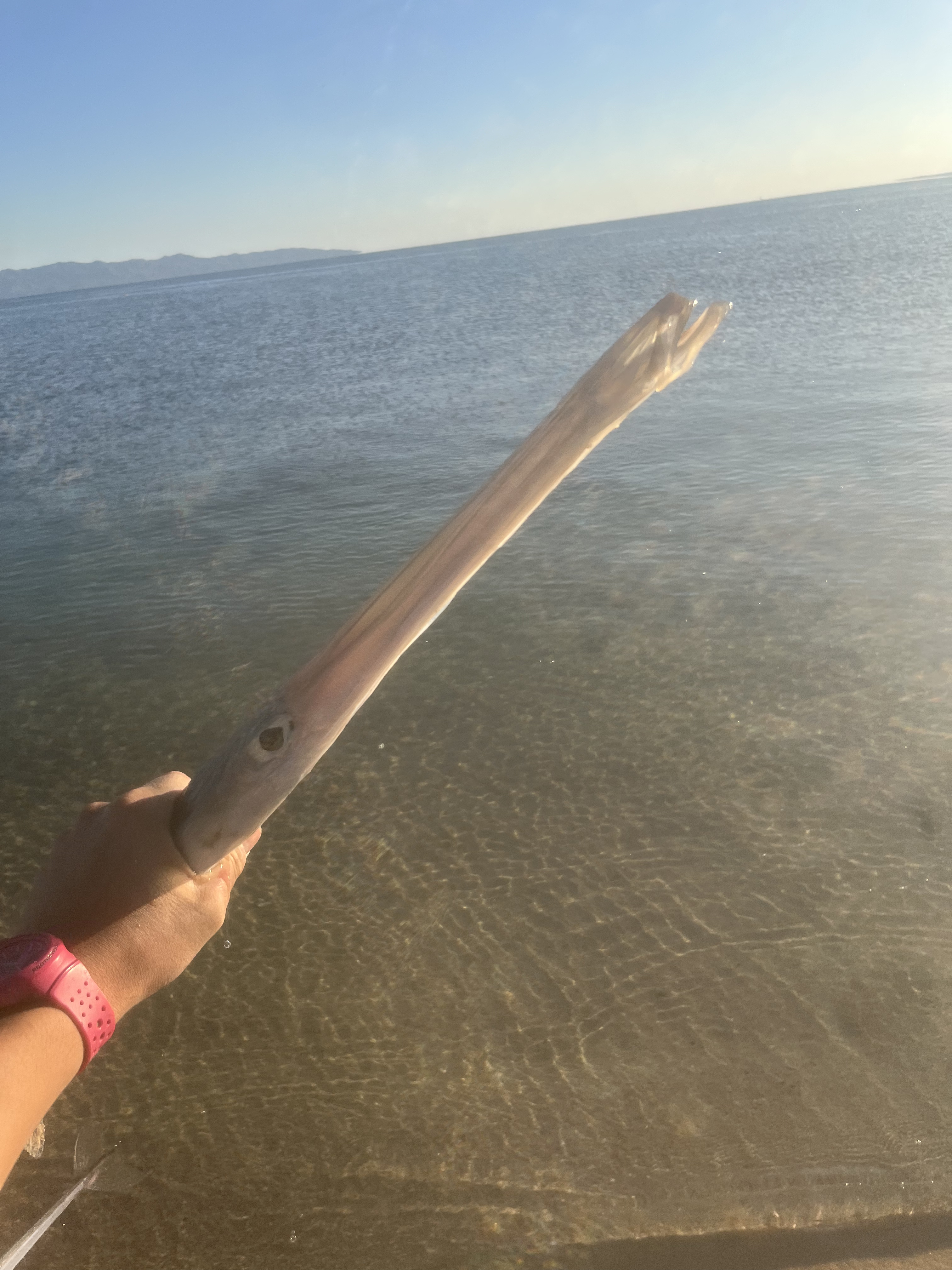
This was the most common fish caught. The first one I caught, I had no idea what to expect, so was pleasantly surprised that there were so many of them willing to take the fly! They are quite slimy, and often will follow the fly in packs before one of them takes it. The largest I caught was around 3 feet, which is definitely the longest fish that I’ve caught. They aren’t strong fighters, but do pull the rod a little for the bigger ones. They will fight by attempting to swim backwards with the back of their body, since their long bill isn’t flexible at all. They don’t have huge surfaces for pushing water, which explains their lack of fight.
Roosterfish
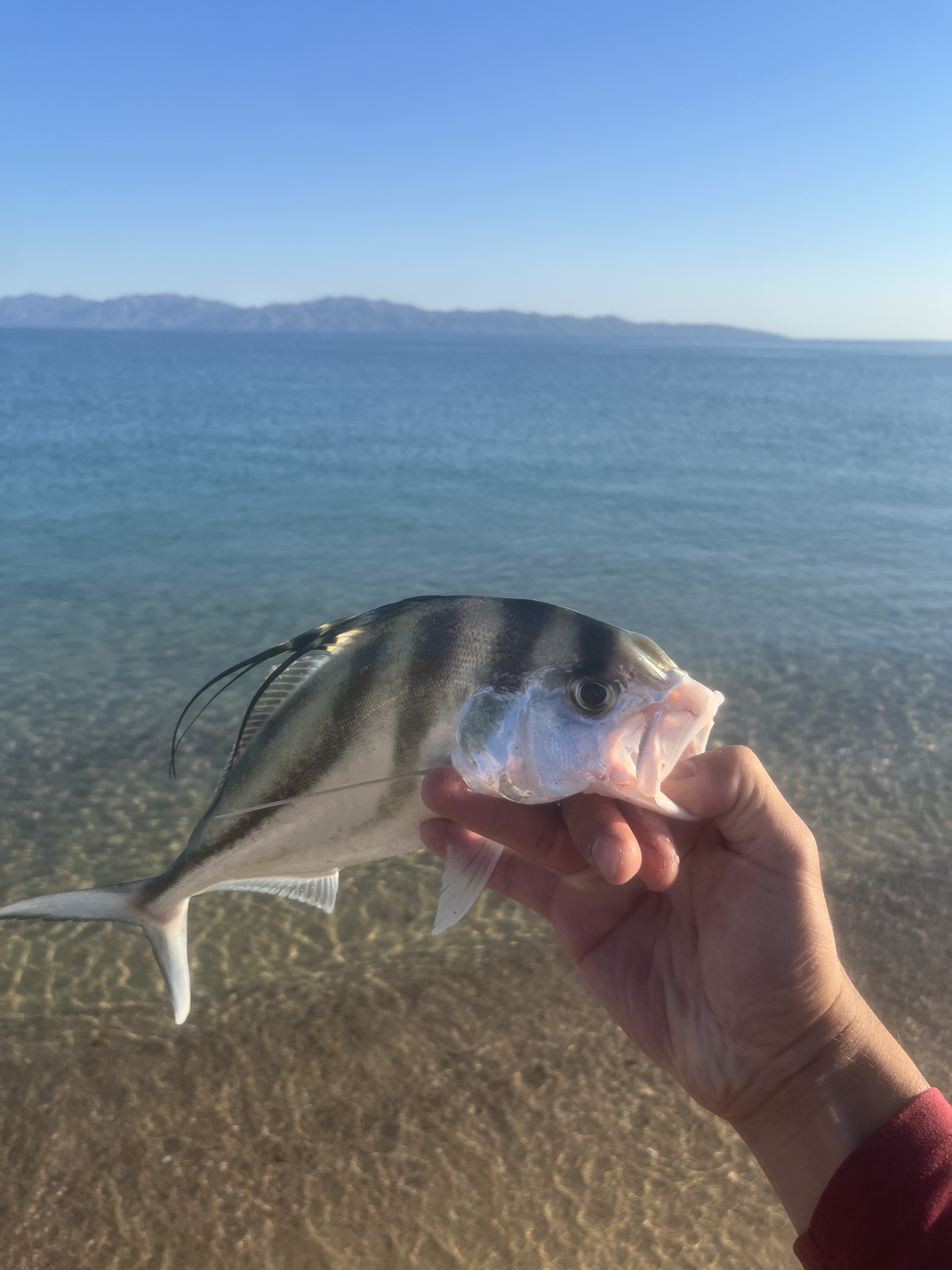
I caught one roosterfish from shore! This roosterfish wasn’t very large, but fought very hard, and the take on the fly was insane. I casted out probably around 60 feet, and then stripped the fly in quickly as a baitfish school passed by, and as they passed, the roosterfish swooped in from the side and hit the fly super hard. These fish are so cool to watch chase bait around, since their dorsal fin will stick out of the water as they rip around chasing food. They are so fast, and so agressive on the hook, and are a blast to catch. I wish I caught more of them, but the one that I caught was plenty good for me. We also targeted roosterfish from the fishing charter, but I wasn’t able to hook any of them. I kept seeing them dart towards my fly, but then they would reject it after getting a closer look.
Skipjack Tuna
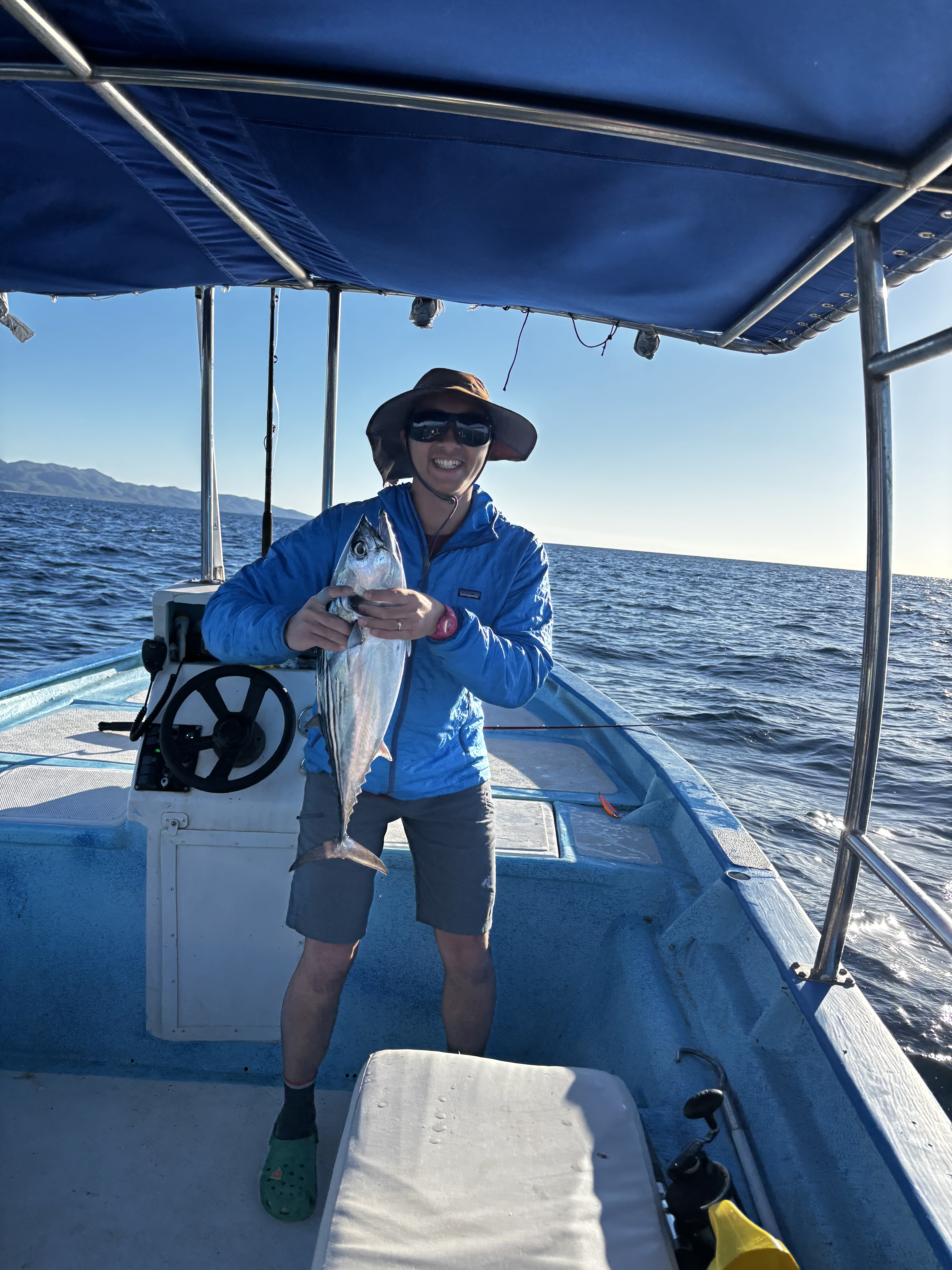
During our fishing charter, we boated out to almost the middle of the channel between Cerralvo and the mainland (where we saw some paddleboarders paddling across the water) and our guide threw out some of our Sardina at pre-marked buoys. If there were no fish that showed, or if there were only a few, we moved on to the next spot. I believe that these might be indicators for Fish Aggregating Devices (FADs), so that fish are always reliably around. Once we got to a spot that had plenty of fish, our guide continually tossed a few baitfish in the water to keep the tuna feeding, and we casted the two lure rods and one rod with the live bait and hooked into these huge fish. Man, do these fish fight hard! These definitely take the spot for the hardest-fighting fish that I’ve ever caught, and my arm was pretty tired after only catching a few of them. We did not keep these, since the guide advised us to release them. I think next time I’d like to keep one and see what the meat tastes like, since it is supposedly popular in Hawaiian culture.
Yellow Pompano
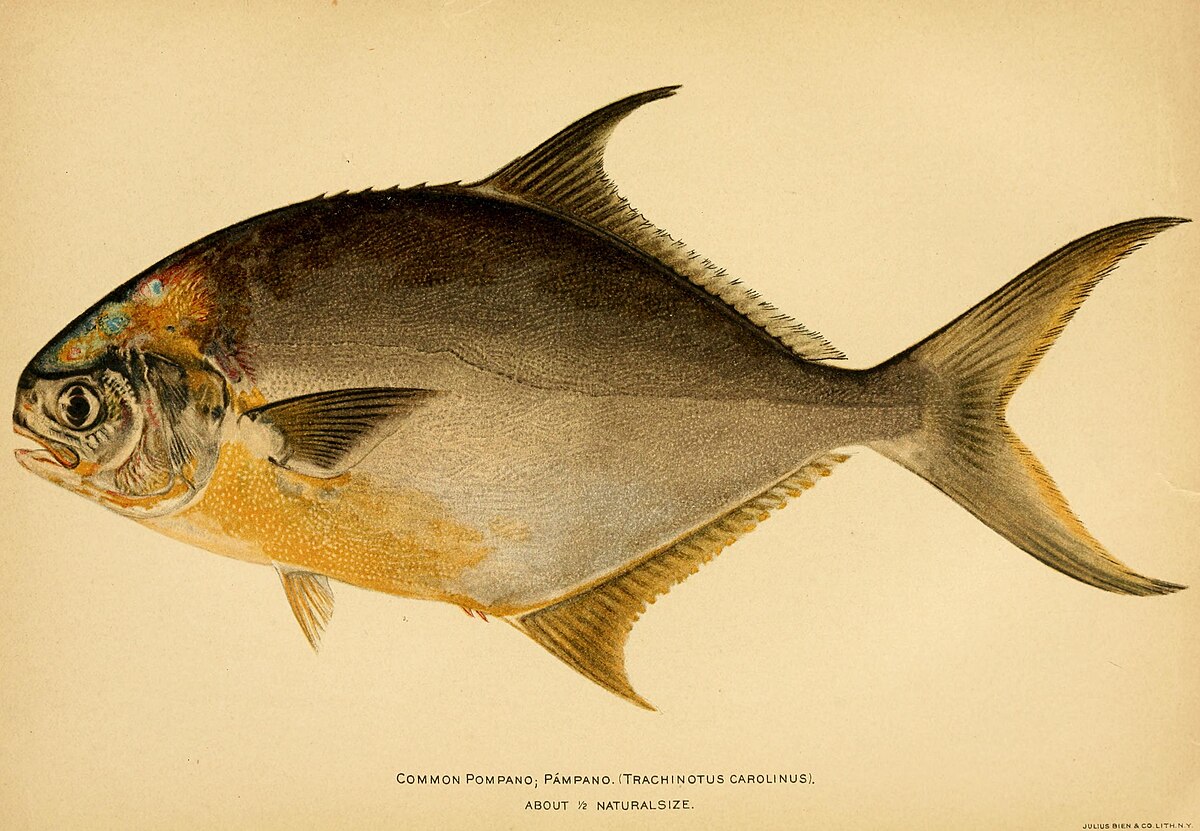
I hooked one on the fly, fought it all the way back to the boat, but then it broke off as we were trying to get it into the boat. I was only on 15 lb line, so that’s probably why. It was big, and was a good fight, so I still count this one was a win. One of my friends who was also on the charter ended up catching two of these, and we ate them as ceviche and grilled, and both forms were delicious.
Takeaways
The trip to La Ventana from a fishing perspective was definitely a success. I know next time that I want to bring some bigger flies to imitate some of the bigger baitfish, and maybe a better leader system, since I was still having some issue with casting consistently. I really enjoyed catching the roosterfish from shore, but I think that doing a few more charters would be much more successful, and would end up with many more species than just trumpetfish over and over. I did think that the intermediate line was perfect for this case though, so I definitely chose correctly there.
Bonus spotted
- Tiger Snake Eel
- Flying fish
- Spotted Round Stingray
- Mobula Ray (jumping)
- Sierra Mackerel (caught by friend)
- Flash of a Dorado
Fun Facts
- Isla Cerralvo officially is known as Isla Jacques Cousteau, but this name isn’t widely accepted by those living nearby.
- Trumpetfish are in the same order as sea horses.